Or as I once asked, “does the marketing drive the science or the science drive the marketing?”
Since Chief beat me to the punch, I strong recommend reading his thread first.
Climate change is always a hot topic, and more so today than ever. Every scientist has a position on it, including myself. This thread, then, is presented because I had this discussion with a few people, scientists, who are not affiliated with any University group, or independent group advocating, promoting “Let’s do something!” really, it was a discussion amongst a few scientist from various backgrounds.
Without a doubt things are changing in our environment. One just has to go to Alaska to see the once great glaciers all but disappearing. In fact, one of the greatest concerns is called “rebound” earthquakes. This is happening in Alaska due to the disappearance of tons of glacial ice per square inch off of Alaskan soil which is causing the earth, mantle, to “rebound” from all the weight coming off from it.
However, there are other factors to take into account that indicates empirical change in our world and that would be the receding glaciers in Antarctica where entire shelves of ice are calving and separating from the continent only to float northwards in the currents and melt.
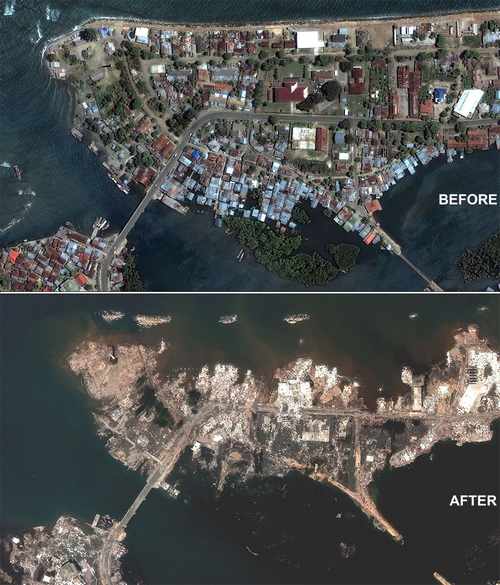
Also, there are other indicators that things are on the move…earthquakes in deep places. Everyone knows about the tsunami that scrubbed clean lots of islands and mainland resorts in the Pacific, but what a lot of people don’t know is that that earthquake was so powerful it actually shifted the axis of the planet…not by a whole lot…but significantly enough that it was noticed.
Which brings me to this point: We live on a dynamic planet.
Living on a dynamic planet means that things are going to change.
Oh yes, they will.
What doesn’t change are peoples attitudes, and for the rejoinder I would like to say that we should take care of our planet regardless of whether or not our production of greenhouse gases is affecting the temperature of the planet.
One of the more interesting aspects of human influence on the planet can be found in England…eight-to-ten inches below the surface. There, you will find the ash layer…soot really, that is a left over from the birth of the industrial age. Apparently, the ash is from all the coal that was burned to fuel the engines of progress…and even though the descriptions from that time of gray foreboding skies, choking smog, and black lung that affected non-miners the island still has green hills.
And really, that is where I’m coming from.
Life adapts, continues and moves on with us…or…without us.
So what, then, is our motivation for keeping the planet we live on healthy, and nice?
Well, because someone has to be the fucking parent in a world full of shitty diaper wearing children. I wouldn’t let my son run around in shitty diapers, and I suspect none of you would, either
And besides, who wants to lay down in their own garbage?
So, really, the truth of the matter is yes, things are a changing on our planet, and more than likely if we curbed our desire to soil our own beds we probably wouldn’t have so many environmental problems…but there is the issue of the human condition and that, in my opinion, is what the Climatologist were trying to change. Albeit, inelegantly, and deceptively, which in the end did more harm than if they had just been forthright and let he science speak for itself.
In short, yes, there is significant evidence that points to change, and yes, there are a lot of people who have vested interests in advocating for and against doing something.
The real question you have to ask yourself is what are you going to do about it?
Monday, December 7, 2009



Everybody talks about the weather...
bg mentioned the Copenhagen Conference on climate change and the recent fooforaw about the "censoring" of climate change skeptics by the mainstream climatologists.
Now, overall, I am perfectly confident that if human industrial emissions ARE having a significant impact on global climate (and I cannot imagine why they wouldn't - see below) that this conference will continue the great tradition of looking away from a difficult and painful choice until it rips our collective head off and vomits down the neck stump. There never has been a human society that anticipated their own impact on natural systems prior to those systems going to hell. Ask the Sumerians about soil salinization, the Anasazi about irrigated agriculture in a desert, or the Easter Islanders about giant heads. Oh, wait, you can't... But as for the "censoring" the skeptics...my background is in geology, not climatology, but here's my short take:
1. We are in an interglacial, and we know that over the past 1.8 million years the Earth has warmed and cooled considerably from where it is today. From the VOSTOK ice cores in the Antarctic we have O16/O18 ratios that give us a fair idea of global temperatures back into the end of the late Pleistocene. Stratigraphic, palynological and flora/fauna interpretation can give us a good guesstimate of global temps back at least as far as the Proterozoic (4 billion years ago). And we know from that that the Earth has been both much warmer and much colder than it is now.
2. But...the temperature data we have now looks suspicious; it spikes starting in the late 18th Century and that trend seems to be continuing. This trendline is rising at about the same rate as the Paleocene-Eocene Thermal Maximum, which saw 6 degrees of rise in 20,000 years and had a fairly major impact on planetary life. The thing is that we think that the PETM was triggered by one or more natural causes, the most likely thought to be the release of deep-ocean methane deposits or "clathrates". Of the other natural or cosmogenic processes that have affected global temperatures, from cometary impacts to the development of grasses, we have seen none over the past 200 years.
3. We also know that...
4. Industrial gases, including CO2, do have a "greenhouse" effect, and we have poured a tremendous amount of them (relative to the global baseline) into the air since about 1800.
5. So it makes sense, in a purely empirical way, to be highly skeptical of the notion that "humans can't alter the global temperature stasis", which is the primary point of the skeptics. Even if the temp spike and the industrial emissions aren't 1:1, it makes no sense to think that there's no effect at all (which is the main skeptic point).
6. And the real problem is that we know from Venus that there's a tipping point where the greenhouse becomes irreversible. And we don't really know what that tipping point is here on Earth. Runaway greenhouse here is unlikely - we have too much free water - but the point is we don't know. We don't know what is happening, other than the global temperature is rising above the normal trend and we have no smoking gun - no volcanism, no bolides, no clathrates, nothing that we know or think has caused warming in the past - to account for it. We don't know.
7. So since we know so little to me it makes perfect sense to reduce the amount of industrial gas emitted into the atmosphere to the greatest extent possible. And many of the skeptics
- whose evidence consists mostly of nitpicking holes in the theory and some pretty wild assumptions (as in the cartoon above - are paid for by industries that have a short-term stake in preventing this. It's also worth noting, as the Toronto Sun editorial stated:
This whole business is another attempt to make doing nothing - or making a mistake - seem like doing the right thing. Haven't we been there before?
So my feeling is this: we're not going to reverse the industrial revolution and go back to living in yurts. No one who warns of climate change believes we will. What they are trying to do is talk to a largely uneducated, credulous and greedy public about the notion that we need to put off our pursuit of that Wii and that Hummer H4 to slow down the emissions cycle and reduce the chance that we will end up with a runaway greenhouse.
This is the scientific equivalent of taking your foot off the gas because the terrain ahead suggests there may be a hard left turn in front of you. The skeptics, many of them, are saying "Fuck you, you pussy, floor it!" for no reason other than they have found some irregularities in the climate data, the scientific equivalent of saying that you don't need brakes because the road has always been straight and always will be.
So in a perfect world the climatologists would lay out all the data, point to the trend and then point out the irregularities and discrepancies and admit "We don't know why this is, this seems anomalous, but the overall data seems to suggest this." But the Western publics know only this: anything that curtails their industrial "progress" makes them "poorer" in the short-term.
Therefore if someone can manage to take those irregularities and discrepancies and make them look like a fatal flaw (which is possible with any scientific data you don't really understand how to interpret) they will seize on it as an opportunity to do nothing.
So I don't think that what the climatologists did was smart in the long run; if there IS a serious climate problem, people in general are going to have to become smarter about it in order to solve it.
But in the long run we're all dead and these guys have been fighting the battle against the nay-sayers for thirty years. We all saw how the people who were skeptical about the good sense of invading a fucked-up post-Ottoman Third World dictatorship to let freedom reign were swiftboated and lied about and generally screwed over. They did, too.
So I can fully understand their instinct to shut these guys up before they managed to raise their Pecksniffian bullshit to full Cheney on them.
The editorial in the journal Nature sums the situation up pretty well:
Just ask anyone in Sumer.
Or on Venus.
Now, overall, I am perfectly confident that if human industrial emissions ARE having a significant impact on global climate (and I cannot imagine why they wouldn't - see below) that this conference will continue the great tradition of looking away from a difficult and painful choice until it rips our collective head off and vomits down the neck stump. There never has been a human society that anticipated their own impact on natural systems prior to those systems going to hell. Ask the Sumerians about soil salinization, the Anasazi about irrigated agriculture in a desert, or the Easter Islanders about giant heads. Oh, wait, you can't...
 But as for the "censoring" the skeptics...my background is in geology, not climatology, but here's my short take:
1. We are in an interglacial, and we know that over the past 1.8 million years the Earth has warmed and cooled considerably from where it is today. From the VOSTOK ice cores in the Antarctic we have O16/O18 ratios that give us a fair idea of global temperatures back into the end of the late Pleistocene. Stratigraphic, palynological and flora/fauna interpretation can give us a good guesstimate of global temps back at least as far as the Proterozoic (4 billion years ago). And we know from that that the Earth has been both much warmer and much colder than it is now.
2. But...the temperature data we have now looks suspicious; it spikes starting in the late 18th Century and that trend seems to be continuing. This trendline is rising at about the same rate as the Paleocene-Eocene Thermal Maximum, which saw 6 degrees of rise in 20,000 years and had a fairly major impact on planetary life.
 The thing is that we think that the PETM was triggered by one or more natural causes, the most likely thought to be the release of deep-ocean methane deposits or "clathrates". Of the other natural or cosmogenic processes that have affected global temperatures, from cometary impacts to the development of grasses, we have seen none over the past 200 years.
3. We also know that...
4. Industrial gases, including CO2, do have a "greenhouse" effect, and we have poured a tremendous amount of them (relative to the global baseline) into the air since about 1800.
5. So it makes sense, in a purely empirical way, to be highly skeptical of the notion that "humans can't alter the global temperature stasis", which is the primary point of the skeptics. Even if the temp spike and the industrial emissions aren't 1:1, it makes no sense to think that there's no effect at all (which is the main skeptic point).
6. And the real problem is that we know from Venus that there's a tipping point where the greenhouse becomes irreversible. And we don't really know what that tipping point is here on Earth. Runaway greenhouse here is unlikely - we have too much free water - but the point is we don't know. We don't know what is happening, other than the global temperature is rising above the normal trend and we have no smoking gun - no volcanism, no bolides, no clathrates, nothing that we know or think has caused warming in the past - to account for it. We don't know.
7. So since we know so little to me it makes perfect sense to reduce the amount of industrial gas emitted into the atmosphere to the greatest extent possible. And many of the skeptics

- whose evidence consists mostly of nitpicking holes in the theory and some pretty wild assumptions (as in the cartoon above - are paid for by industries that have a short-term stake in preventing this. It's also worth noting, as the Toronto Sun editorial stated:
"A key factor in the controversy is that the data discussed in these e-mails was not suppressed. It was discussed in the IPCC's Fourth Assessment report, which concluded it is more than 90% likely that human emissions of greenhouse gases are responsible for climate change."
This whole business is another attempt to make doing nothing - or making a mistake - seem like doing the right thing. Haven't we been there before?
So my feeling is this: we're not going to reverse the industrial revolution and go back to living in yurts. No one who warns of climate change believes we will. What they are trying to do is talk to a largely uneducated, credulous and greedy public about the notion that we need to put off our pursuit of that Wii and that Hummer H4 to slow down the emissions cycle and reduce the chance that we will end up with a runaway greenhouse.
This is the scientific equivalent of taking your foot off the gas because the terrain ahead suggests there may be a hard left turn in front of you. The skeptics, many of them, are saying "Fuck you, you pussy, floor it!" for no reason other than they have found some irregularities in the climate data, the scientific equivalent of saying that you don't need brakes because the road has always been straight and always will be.
So in a perfect world the climatologists would lay out all the data, point to the trend and then point out the irregularities and discrepancies and admit "We don't know why this is, this seems anomalous, but the overall data seems to suggest this." But the Western publics know only this: anything that curtails their industrial "progress" makes them "poorer" in the short-term.
Therefore if someone can manage to take those irregularities and discrepancies and make them look like a fatal flaw (which is possible with any scientific data you don't really understand how to interpret) they will seize on it as an opportunity to do nothing.

So I don't think that what the climatologists did was smart in the long run; if there IS a serious climate problem, people in general are going to have to become smarter about it in order to solve it.
But in the long run we're all dead and these guys have been fighting the battle against the nay-sayers for thirty years. We all saw how the people who were skeptical about the good sense of invading a fucked-up post-Ottoman Third World dictatorship to let freedom reign were swiftboated and lied about and generally screwed over. They did, too.
So I can fully understand their instinct to shut these guys up before they managed to raise their Pecksniffian bullshit to full Cheney on them.
The editorial in the journal Nature sums the situation up pretty well:
"In the end, what the UEA e-mails really show is that scientists are human beings — and that unrelenting opposition to their work can goad them to the limits of tolerance, and tempt them to act in ways that undermine scientific values. Yet it is precisely in such circumstances that researchers should strive to act and communicate professionally, and make their data and methods available to others, lest they provide their worst critics with ammunition."But no matter. The entire controversy is a tale told by a lot of idiots, full of sound and fury, signifying nothing. The bottom line is that if this climate problem forces us to make a hard decision today, forces us to put down the TV remote and do something that makes us poorer and smaller in the short run...we'll kick it down the road. We like our problems minor, and our major problems invisible - until the moment they strike us dead. That way it's SO much less stressful.
Just ask anyone in Sumer.
Or on Venus.
Tuesday, December 1, 2009
Afghanistan's plains
It now appears certain that the present Administration is going to commit something like 10-12 additional maneuver brigades (or the equivalent of 2.5 divisions in our presently effectively-divisionless Army) to the Umpteenth Afghan War.
Debate at this juncture seems meaningless. After all, it has been over a year since the Obama Administration took over, there have been endless debates on the subject, and at no point does anyone with any significant influence in Washington seem to have said "Well, sod this for a game of soldiers; let's just grab a hat." Fred Kaplan, one of the few writers at Slate with any pretense of having given this war any real thought, comes down tentatively, hesitantly, gingerly, what-ever-other-name-you-want-to-give-the-act-of-sitting-down-naked-on-a-bear-trap-ly on the side of continued engagement after reading off all the reasons that this foreign expedition will probably fail.
Fine, Fred. You've probably thought about this more than I have. But...here's the thing; to me, there's a hidden landmine, a real shot-to-the-heart, buried in the very last paragraph on the first page:
Now I come at this from a very specific frame of reference. To wit: I spent about 8 years as an airborne medic and medical NCO in airborne line units just like 4th BDE (which, from the division's website, looks like two battalions of the 508 PIR (airborne light infantry) and a battalion of the 73rd Cav, which is no longer the light tank outfit it was when I was there but some sort of bastard wheeled recon/security organization in HUMVEEs). Pretty much standard-issue paratroops. Good on 'em.
But.
Here's the nitty: we didn't train people. Airborne troopers aren't trained to train people, especially foreign people. Check their METL. "Train Afghan troops"?
Not there.
They fight, and fight well. They include some truly outstanding NCOs who could teach eunuchs to fuck like mink. But "train Afghan soldiers"?
Nope. Sod THAT for a game of soldiers.
If this is what the "plan" is - to use some of our maneuver elements to straight-up fight the Talibs (a losing game in Afghanistan, where foreign troops can either be merciless conquerors or just passing through, but not really anything in-between, not successfully, not for long) and the rest to "train Afghan troops" - we're looking at a years-long arc of fail.
Training foreign maneuver forces is a hell of a tricky job, touchy as old explosives and calling for a very specific skill set that is usually developed over years if not decades. The British used to have a terrific knack for it; you had people like "Chinese" Gordon training the "Ever-Victorious Army" of mercenaries in 1860 and then the Khedive's Army in Egypt in the 1880s, Kitchener training those same Egyptians and Sudanese. Guys like Harry Maclean in Morocco training the hell out of the local bandits (that's him below, third from left with the lovely white whiskers) But these guys weren't doing something for freedom or democracy; they were working for the good of their own Empire. They were going to be there a looooong time, and knew it. They went native, and, largely because of that, were well outside their own regular Army, the very sorts of guys that today make up the 4th BDE, 82nd ABN and all the units like it.
Mind you, we used to have a bunch of folks like old Harry Maclean, whose specific job it was to do what he did. They were called "Special Forces" and their entire rationale was to sneak into Bad Places, train up local yobs into "Mike Forces", fight the Bad Guys and, if that didn't work, blow hell out of the place and split.
Mind you, this was before the SF was turned into Rangers with sexier hats.
Whatever.
But grabbing a bunch of guys off of Ardennes Street and expecting them to produce the 21st Century-equivalent-of-the-Indian-Army-of-the-Raj out of a bunch of illiterate Hazaras and starving Pashtuns?
That's the fucking "plan"?
Jesus wept.
That ain't gonna work. "When you're wounded and left on Afghanistan's plains,
And the women come out to cut up what remains,
Jest roll to your rifle and blow out your brains
An' go to your Gawd like a soldier.
Go, go, go like a soldier,
Go, go, go like a soldier,
Go, go, go like a soldier,
So-oldier ~of~ the Queen!"
(Endnote: after I published this I stopped and really LOOKED at the two pictures of the current GIs I had grabbed off the internet and my first thought was: what the FUCK are these goatscrews? A squad straggling through the desert like a bunch of Castro Street drag queens at the fucking Gay Pride Parade? Joe Snuffy going for his third attempt at a posthumous Purple Heart skylining on the knoll? Where the hell are their team leaders, squad leaders, and platoon sergeant?
Does anybody here know how to play this game?)
Debate at this juncture seems meaningless. After all, it has been over a year since the Obama Administration took over, there have been endless debates on the subject, and at no point does anyone with any significant influence in Washington seem to have said "Well, sod this for a game of soldiers; let's just grab a hat."
 Fred Kaplan, one of the few writers at Slate with any pretense of having given this war any real thought, comes down tentatively, hesitantly, gingerly, what-ever-other-name-you-want-to-give-the-act-of-sitting-down-naked-on-a-bear-trap-ly on the side of continued engagement after reading off all the reasons that this foreign expedition will probably fail.
Fine, Fred. You've probably thought about this more than I have. But...here's the thing; to me, there's a hidden landmine, a real shot-to-the-heart, buried in the very last paragraph on the first page:
"Earlier this year, Secretary of Defense Robert Gates said that enlarging the Afghan army was the key to success (and to America's exit). In March, when Obama ordered another 21,000 troops to Afghanistan, Gates assigned 4,000 of them—the 4th brigade of the 82nd Airborne Division, a highly decorated combat unit—specifically to train Afghan soldiers."Emphasis mine.
Now I come at this from a very specific frame of reference. To wit: I spent about 8 years as an airborne medic and medical NCO in airborne line units just like 4th BDE (which, from the division's website, looks like two battalions of the 508 PIR (airborne light infantry) and a battalion of the 73rd Cav, which is no longer the light tank outfit it was when I was there but some sort of bastard wheeled recon/security organization in HUMVEEs). Pretty much standard-issue paratroops. Good on 'em.
But.
Here's the nitty: we didn't train people. Airborne troopers aren't trained to train people, especially foreign people. Check their METL. "Train Afghan troops"?
Not there.
They fight, and fight well. They include some truly outstanding NCOs who could teach eunuchs to fuck like mink. But "train Afghan soldiers"?
Nope. Sod THAT for a game of soldiers.
If this is what the "plan" is - to use some of our maneuver elements to straight-up fight the Talibs (a losing game in Afghanistan, where foreign troops can either be merciless conquerors or just passing through, but not really anything in-between, not successfully, not for long) and the rest to "train Afghan troops" - we're looking at a years-long arc of fail.
Training foreign maneuver forces is a hell of a tricky job, touchy as old explosives and calling for a very specific skill set that is usually developed over years if not decades. The British used to have a terrific knack for it; you had people like "Chinese" Gordon training the "Ever-Victorious Army" of mercenaries in 1860 and then the Khedive's Army in Egypt in the 1880s, Kitchener training those same Egyptians and Sudanese. Guys like Harry Maclean in Morocco training the hell out of the local bandits (that's him below, third from left with the lovely white whiskers)
 But these guys weren't doing something for freedom or democracy; they were working for the good of their own Empire. They were going to be there a looooong time, and knew it. They went native, and, largely because of that, were well outside their own regular Army, the very sorts of guys that today make up the 4th BDE, 82nd ABN and all the units like it.
Mind you, we used to have a bunch of folks like old Harry Maclean, whose specific job it was to do what he did. They were called "Special Forces" and their entire rationale was to sneak into Bad Places, train up local yobs into "Mike Forces", fight the Bad Guys and, if that didn't work, blow hell out of the place and split.
Mind you, this was before the SF was turned into Rangers with sexier hats.
Whatever.
But grabbing a bunch of guys off of Ardennes Street and expecting them to produce the 21st Century-equivalent-of-the-Indian-Army-of-the-Raj out of a bunch of illiterate Hazaras and starving Pashtuns?
That's the fucking "plan"?
Jesus wept.
That ain't gonna work.
 "When you're wounded and left on Afghanistan's plains,
And the women come out to cut up what remains,
Jest roll to your rifle and blow out your brains
An' go to your Gawd like a soldier.
Go, go, go like a soldier,
Go, go, go like a soldier,
Go, go, go like a soldier,
So-oldier ~of~ the Queen!"
(Endnote: after I published this I stopped and really LOOKED at the two pictures of the current GIs I had grabbed off the internet and my first thought was: what the FUCK are these goatscrews? A squad straggling through the desert like a bunch of Castro Street drag queens at the fucking Gay Pride Parade? Joe Snuffy going for his third attempt at a posthumous Purple Heart skylining on the knoll? Where the hell are their team leaders, squad leaders, and platoon sergeant?
Does anybody here know how to play this game?)
Sunday, November 29, 2009
Rummy versus Personnel Strength
I have posted on more than one occasion that Secretary Rumsfeld did not want the expense of the military personnel strength to interfere with his wheeling and dealing "business ways". Every service member in uniform, competed and interfered, by law, with his desire to execute his desires as freely as possible. How's that for a strong statement. Here's why I say that those in uniform competed and interfered, by law, with his desires:
In the private sector, if the CEO needs money for new equipment, he has several ways of getting it. One is to borrow, another is to increase sales, and another is to divert funds for one expense item to the desired purchase. Laying off employees and extracting higher productivity from the remaining work force, for example, allows the salaries and benefits not paid to be diverted to other corporate uses. Or, the employer can find a way to reduce individual salaries and benefits to diver the funds thereby saved.
In the US military budget process, there are three categories of budgeted funds that bear explaining:
1. The Personnel Account (PA). These are the funds specifically identified by Congress to meet the direct payroll and selected benefits requirements of the uniformed military. And, the monies in PA are virtually impossible to divert to other expense items. Unlike XYC Corp, the Secretary of Defense, or any other member of the Defense dept cannot simply reduce pay or the number of uniformed military at his discretion to divert PA funds to other use once a budget has been approved. Nor can money from other accounts be used to make up shortfalls in the PA. The jargon for this is that the PA is "Fenced".
2. The Operations and Maintenance Account (O&M). These are the funds with which the day to day operations of the military are conducted. Civilian payroll, supplies, repairs, contractor services, utilities, bullets, uniforms, and so on come from this account. Fund managers have a degree of discretion in executing these accounts. If you delay hiring a replacement civil servant, the salary not disbursed can be used elsewhere, within some limits.
3. Procurement Accounts. These are the funds designated to buy "big ticket" items, and quite often they have not only dollar, but unit quantity specifics.
Now, for every soldier on the payroll, a part of the Defense budget is and can only be used for his pay, allowances and certain benefits. Further, unless you want the people up in arms because you wouldn't provide food, uniforms and medical care for the troops, a certain portion of the O&M account is basically out of the Defense Secretary's control, as it must be spent to accomplish these ends, and every fellow in uniform requires food, uniforms, medical care, equipment, etc. In short, a huge portion of the Defense budget is "Fenced" to support the people in uniform, or is driven by circumstances to support the people in uniform. Even O&M funds that are, on the surface, available to support things of the Defense Secretary's choosing, are tied to personnel strength levels to a great degree.
One would be a fool to think that Congress is willing to write a blank check to the Defense Dept. Unlike XYZ Corp, that can try to increase sales to get more money to fund internal priorities/desires, DOD can only work with what Congress sees as the TOTAL expense level it will accept for the Defense Budget. If a SecDef wishes to spend 10% more on missiles next year, he very well may have to give up something in exchange, just a a CEO with no hope of increased sales/revenue must fore go an expense item to use that money elsewhere. But, unlike his corporate CEO counterpart, the SecDef cannot play fast and loose with the PA to meet his internal expense priorities.
Now, Mr Rumsfeld was seduced by technology to increase the "lethality" of the armed forces. One aspect of lethality is that each service member can kill more bad guys with technology than without, and the next logical conclusion (if you want to call it "logical") is that therefore, fewer troops can kill the same numbers of bad guys with better "toys". Now, in an auto manufacturing plant, technology can decrease payroll expense without reducing the plant output. But the DOD really has more in their mission than killing and blowing up things, and Phase IV is one of them, or at least the potential for Phase IV operations. But, Phase IV operations, by their very nature, are not lethality based, and are very manpower intensive. So, if you can avoid Phase IV responsiblities, you can reduce manpower requirements.
How antagonistic was Rummy toward manpower costs? Well, he openly expressed irritation that his budget had to divert his attention to and pay for "grocery stores, department stores and hospitals that no proper private sector employer had to provide". When reminded that the Exchanges were not supported by budgeted funds, they dropped out of his cross-hairs. To reduce the number of medical staff being paid out of the PA, we simply had their stateside billets converted to contractors paid out of the O&M accounts, adjusting staffing as necessary to manage the O&M dollars as he saw fit. Or, shifted patient care from military hospitals to nearby civilian hospitals to move that expense to the TRICARE (insurance) account.
Why the dependence on contractors in Iraq? Because one hires them on an "as needed" basis and pays them out of O&M funds. If the need for fuel transportation drops, reduce the contract requirements and spend the money elsewhere. GI fuel truck drivers cost the same amount whether they deliver fuel or not, and those PA funds cannot be shifted.
Now, as to what I saw as evidence that Rummy wanted to strip the military down to a "shock and awe" capability only? First, there was a numeric ceiling on the force for the invasion of Iraq. Now, any student of the military will tell you that personnel numbers are meaningless. Operational thinkers work with "Force Packages". There is a warfighting difference between 2,500 troops and a Brigade Task Force, and there are also different types of brigades, based upon the type of warfare (light infantry, armor, etc). "2,500 troops" tells us nothing about the capability of the resulting force. Yet, Rumsnamara was not going to entertain more than 250,000 uniformed personnel in theater, regardless of the force composition needs. Thus, significant and necessary combat service support units were left off the battle roster. Thus, the 3rd ID, for example, had difficulty getting rations when the operation lasted longer than anticipated, and contractor logistic support was not available. And this diddling with "non lethal elements" being left behind by design can be traced directly to SecDef.
To be able to really "conquer" an enemy and stand up, over time, a new state, requires, as GEN Shinseki so gracefully stated, many, many more soldiers than just invading and toppling the army and government of another nation. If we are to have a military capable of conquering another nation and properly occupying it, the size and type of Army Rumsfeld envisioned, small and lethal, but nothing else, will never get the job done. I'm not saying that we ever could have stood up an acceptable and functioning government in Iraq. What I am saying is that if it is possible, we did nothing to make that happen, and that nothing was by the intent and design of one Donald Rumsfeld.
So, we are not, nor never have been facing an "insurgency" in Iraq. What is going on there is no different that the chaos in New Orleans when the forces of nature kept the civil authorities from providing basic and effective public safety services. No police, fire, water, electricity, sanitation result in a break down of the social order and you end up with looting and other associated crimes. And like Iraq, some of the criminals were from outside New Orleans. The difference in Iraq is that after the total destruction of the elements maintaining the social order, the follow on structure was too little and too late. It's not an "insurgency" but a totally failed occupation.
In the private sector, if the CEO needs money for new equipment, he has several ways of getting it. One is to borrow, another is to increase sales, and another is to divert funds for one expense item to the desired purchase. Laying off employees and extracting higher productivity from the remaining work force, for example, allows the salaries and benefits not paid to be diverted to other corporate uses. Or, the employer can find a way to reduce individual salaries and benefits to diver the funds thereby saved.
In the US military budget process, there are three categories of budgeted funds that bear explaining:
1. The Personnel Account (PA). These are the funds specifically identified by Congress to meet the direct payroll and selected benefits requirements of the uniformed military. And, the monies in PA are virtually impossible to divert to other expense items. Unlike XYC Corp, the Secretary of Defense, or any other member of the Defense dept cannot simply reduce pay or the number of uniformed military at his discretion to divert PA funds to other use once a budget has been approved. Nor can money from other accounts be used to make up shortfalls in the PA. The jargon for this is that the PA is "Fenced".
2. The Operations and Maintenance Account (O&M). These are the funds with which the day to day operations of the military are conducted. Civilian payroll, supplies, repairs, contractor services, utilities, bullets, uniforms, and so on come from this account. Fund managers have a degree of discretion in executing these accounts. If you delay hiring a replacement civil servant, the salary not disbursed can be used elsewhere, within some limits.
3. Procurement Accounts. These are the funds designated to buy "big ticket" items, and quite often they have not only dollar, but unit quantity specifics.
Now, for every soldier on the payroll, a part of the Defense budget is and can only be used for his pay, allowances and certain benefits. Further, unless you want the people up in arms because you wouldn't provide food, uniforms and medical care for the troops, a certain portion of the O&M account is basically out of the Defense Secretary's control, as it must be spent to accomplish these ends, and every fellow in uniform requires food, uniforms, medical care, equipment, etc. In short, a huge portion of the Defense budget is "Fenced" to support the people in uniform, or is driven by circumstances to support the people in uniform. Even O&M funds that are, on the surface, available to support things of the Defense Secretary's choosing, are tied to personnel strength levels to a great degree.
One would be a fool to think that Congress is willing to write a blank check to the Defense Dept. Unlike XYZ Corp, that can try to increase sales to get more money to fund internal priorities/desires, DOD can only work with what Congress sees as the TOTAL expense level it will accept for the Defense Budget. If a SecDef wishes to spend 10% more on missiles next year, he very well may have to give up something in exchange, just a a CEO with no hope of increased sales/revenue must fore go an expense item to use that money elsewhere. But, unlike his corporate CEO counterpart, the SecDef cannot play fast and loose with the PA to meet his internal expense priorities.
Now, Mr Rumsfeld was seduced by technology to increase the "lethality" of the armed forces. One aspect of lethality is that each service member can kill more bad guys with technology than without, and the next logical conclusion (if you want to call it "logical") is that therefore, fewer troops can kill the same numbers of bad guys with better "toys". Now, in an auto manufacturing plant, technology can decrease payroll expense without reducing the plant output. But the DOD really has more in their mission than killing and blowing up things, and Phase IV is one of them, or at least the potential for Phase IV operations. But, Phase IV operations, by their very nature, are not lethality based, and are very manpower intensive. So, if you can avoid Phase IV responsiblities, you can reduce manpower requirements.
How antagonistic was Rummy toward manpower costs? Well, he openly expressed irritation that his budget had to divert his attention to and pay for "grocery stores, department stores and hospitals that no proper private sector employer had to provide". When reminded that the Exchanges were not supported by budgeted funds, they dropped out of his cross-hairs. To reduce the number of medical staff being paid out of the PA, we simply had their stateside billets converted to contractors paid out of the O&M accounts, adjusting staffing as necessary to manage the O&M dollars as he saw fit. Or, shifted patient care from military hospitals to nearby civilian hospitals to move that expense to the TRICARE (insurance) account.
Why the dependence on contractors in Iraq? Because one hires them on an "as needed" basis and pays them out of O&M funds. If the need for fuel transportation drops, reduce the contract requirements and spend the money elsewhere. GI fuel truck drivers cost the same amount whether they deliver fuel or not, and those PA funds cannot be shifted.
Now, as to what I saw as evidence that Rummy wanted to strip the military down to a "shock and awe" capability only? First, there was a numeric ceiling on the force for the invasion of Iraq. Now, any student of the military will tell you that personnel numbers are meaningless. Operational thinkers work with "Force Packages". There is a warfighting difference between 2,500 troops and a Brigade Task Force, and there are also different types of brigades, based upon the type of warfare (light infantry, armor, etc). "2,500 troops" tells us nothing about the capability of the resulting force. Yet, Rumsnamara was not going to entertain more than 250,000 uniformed personnel in theater, regardless of the force composition needs. Thus, significant and necessary combat service support units were left off the battle roster. Thus, the 3rd ID, for example, had difficulty getting rations when the operation lasted longer than anticipated, and contractor logistic support was not available. And this diddling with "non lethal elements" being left behind by design can be traced directly to SecDef.
To be able to really "conquer" an enemy and stand up, over time, a new state, requires, as GEN Shinseki so gracefully stated, many, many more soldiers than just invading and toppling the army and government of another nation. If we are to have a military capable of conquering another nation and properly occupying it, the size and type of Army Rumsfeld envisioned, small and lethal, but nothing else, will never get the job done. I'm not saying that we ever could have stood up an acceptable and functioning government in Iraq. What I am saying is that if it is possible, we did nothing to make that happen, and that nothing was by the intent and design of one Donald Rumsfeld.
So, we are not, nor never have been facing an "insurgency" in Iraq. What is going on there is no different that the chaos in New Orleans when the forces of nature kept the civil authorities from providing basic and effective public safety services. No police, fire, water, electricity, sanitation result in a break down of the social order and you end up with looting and other associated crimes. And like Iraq, some of the criminals were from outside New Orleans. The difference in Iraq is that after the total destruction of the elements maintaining the social order, the follow on structure was too little and too late. It's not an "insurgency" but a totally failed occupation.
Wednesday, November 25, 2009
This turkey bites!
I'd like to join Publius in wishing the entire MilPub - patrons and waitstaff - the happiest and most peaceful of Thanksgiving.
Thanksgiving has always struck me as among the most American of holidays; invented here, founded on a half-ounce of history larded with ten pounds of myth and outright bullshit, centered around a perfectly denatured "religious" occasion and (in modern times) represented by eating too much good food and professional sports.
And since you can't get more Thanksgiving than Star Wars, here's my gift to you all this year: this is an "All-Terrain Turkey Eliminator" walking tank, as envisioned by my little man, who cares nothing for the holiday other than he gets a week off from school. All the best from the four of us here in Portland to all of you, wherever you are.
Thanksgiving has always struck me as among the most American of holidays; invented here, founded on a half-ounce of history larded with ten pounds of myth and outright bullshit, centered around a perfectly denatured "religious" occasion and (in modern times) represented by eating too much good food and professional sports.
And since you can't get more Thanksgiving than Star Wars, here's my gift to you all this year: this is an "All-Terrain Turkey Eliminator" walking tank, as envisioned by my little man, who cares nothing for the holiday other than he gets a week off from school.
 All the best from the four of us here in Portland to all of you, wherever you are.
Thanksgiving

Just when I was wondering what to be thankful for in this, my year of general malaise, brought on by economic distress and stupid wars, I came across this. That's right, folks, the phony shit kicker from Texas, the walking embodiment of the old slur about all hat and no cattle, is gone from the scene. Yes, his successor, despite all of the strong words during the campaign, all too often seems intent on emulating the Crawford Clown, but this post isn't about that.
I say we should just take our blessings where we can. Me, I'm blessed by still being on the right side of the grass and by not having any family or close friends leave me this year. I'm also blessed in having a wonderful spouse and kid, both of whom deserve high marks for putting up with me all these years. And, in the huge blessing department, my daughter is in the process of moving from the San Francisco area to Cambridge, MA, where, just after the first of the year, she will take up new duties as an associate director with a large biotech firm. Boston in the winter: ugh. Boston as a warm weather destination: nice. Boston any time, with my kid there: very good news.
I'm thankful to FDChief, for doing the heavy lifting in putting this blog together. And to the other MilPub bloggers: You make my days brighter and the heavy lifting not quite so heavy. I salute you. I may sometimes disagree with you, but I always respect you. I especially hope Al and Seydlitz, our friends abroad, find a way to carve out a little piece of America on this most American of holidays. Further thanks go to other members of our blog family: to my friends Lisa and Jim, from Ranger Against War, and to all of you who take the time to read our maunderings and to make a contribution. I consider you all friends.
A couple of years ago I asked one prominent military blogger about his practice of "moderating" (read censoring) reader comments, "What are you afraid of?" I noted that, IMO, reader comments were often the best part of a given post, and that I disagreed with any actions taken to censor them. I did not get a satisfactory answer; in fact, I was invited to "get lost." At that point, I decided that no matter how brilliant or well informed this blogger was, if he couldn't stand the heat, participating in his blog wasn't worth it. I bring this up only to note that no one posting on this blog is afraid of comments. Keep 'em coming.
Thinking of Al and Seydlitz, residing in nations where this distinctly American holiday isn't celebrated, takes me back some 30 years or more to when we resided in Bayreuth, FRG. As the person in charge of operations for a large swath of the border with Czechoslovakia and East Germany, I devoted much time to social gatherings with West German government officials. We hosted a Thanksgiving dinner with some of them. And, of course, along with the turkey and the stuffing, we served corn, that most American vegetable. And then I had to talk my German friends into eating the corn.....
Have a wonderful Thanksgiving, everybody.
Monday, November 16, 2009
A Broad, Sound View of War . . .
Today more than ever it is vital that a broad, sound view of war, beyond the petty maxims of the practitioners, should become the common property of every citizen, so that all those striving toward understanding may communicate with each other.
Carl von Clausewitz, Letter to Fichte, 1809
William F. Owen has published a noteworthy article in the Armed Forces Journal:
Language is basic, communication necessary. Propagandists will tell you that language is power.
The words we use do make a difference, words do have specific and concrete meanings, they are a basis of social communication, unless of course following Thucydides we are in political turmoil in which the inability to communicate with words reflects political chaos. In chaos, words that can be linked to interests take on these new meanings, subverting the old meanings, making everything in effect political, a matter of contention. Societies cannot withstand such conditions for long without suffering serious effects.
Prior to this quote, William Owen does a number on "hybrid warfare", another item in the current menagerie of pseudo-strategic notions and potions (N&S).
"Today, we no longer need strategic theory, such an outmoded concept" the N&S guys and gals say, "it's all about politics, which as everyone knows is a thing of the past. We no longer do politics. We just follow and applaud."
Ahhh, the marketplace of "strategy" which is so easy to find, just follow the most current jargon . . . and other loud noises. That being of course because we no longer do "strategy" in the meaning of how our government is organized and structured to do strategy, that according to Clausewitzian definitions . . . not since Cheney decided he wanted to do everything off the books . . .
Carl von Clausewitz, Letter to Fichte, 1809
William F. Owen has published a noteworthy article in the Armed Forces Journal:
. . . Yes, the U.S. Army needs restructuring, but the demise of the Warsaw Pact in 1991 provided a far greater strategic justification for change — and still does — than fighting insurgencies in Iraq and Afghanistan ever could.
U.S. forces are drifting toward viewing counterinsurgency and war-fighting as distinct forms of activity. They are not. They are inextricably linked, in terms of equipment, training, doctrine and education. Thus the Victorian expression of “big wars and small wars.”
War is not changing. The aims and purpose of organized violence for political gain are enduring and unchanging. Insurgencies are war, and most if not all of the observations made in the Army’s new FM 3-24 “Counterinsurgency” manual could have been written in 1991 or earlier. Future wars will be born of future politics, not “globalization” or the Internet. Yes, there will be “unknown unknowns,” but they are just that: unknowable. New words won’t change that. . .
Language is basic, communication necessary. Propagandists will tell you that language is power.
The words we use do make a difference, words do have specific and concrete meanings, they are a basis of social communication, unless of course following Thucydides we are in political turmoil in which the inability to communicate with words reflects political chaos. In chaos, words that can be linked to interests take on these new meanings, subverting the old meanings, making everything in effect political, a matter of contention. Societies cannot withstand such conditions for long without suffering serious effects.
Prior to this quote, William Owen does a number on "hybrid warfare", another item in the current menagerie of pseudo-strategic notions and potions (N&S).
"Today, we no longer need strategic theory, such an outmoded concept" the N&S guys and gals say, "it's all about politics, which as everyone knows is a thing of the past. We no longer do politics. We just follow and applaud."
Ahhh, the marketplace of "strategy" which is so easy to find, just follow the most current jargon . . . and other loud noises. That being of course because we no longer do "strategy" in the meaning of how our government is organized and structured to do strategy, that according to Clausewitzian definitions . . . not since Cheney decided he wanted to do everything off the books . . .
Subscribe to:
Posts (Atom)