Showing posts with label climate. Show all posts

Sunday, October 7, 2018

Whistling...no, partying...past the graveyard.

Perhaps the most bizarre part of the infamous National Highway Transportation Safety Administration (NHTSA) draft EIS is not that it advocates easing up on the emissions standards for American-made vehicles. Comforting business at the expense of the public is, after all, the preferred approach of the Republican Party and the current Administration in particular. The GOP has become not just explicitly the Party of Calhoun but the Party of John D. ("the public be damned!") Rockefeller.

No, it's the part that's buried on page 37 of this sucker. It reads:
"Global mean surface temperature is projected to increase by approximately 3.48°C (6.27°F) under the No Action Alternative by 2100. Implementing the lowest emissions alternative(Alternative 7)would increase this projected temperature rise by 0.001°C (0.002°F), while implementing the highest emissions alternative (Alternative 1)would increase projected temperature rise by 0.003°C (0.005°F) the No Action Alternative."
(NHTSA, 2018)
I want to just stop and think about that for a moment.

This is the U.S. government - and not just the U.S. government, but a U.S. government headed by a man who insists that anthropogenic climate change is some sort of gimmick cooked up with the nefarious yellow Reds to kneecap the Trump Organization's profits - saying casually that the mean surface temperature of the Earth is going to climb almost 4 degrees C in roughly 80 years. Ho, hum. Nothing to see here.

This is not sane or sensible. This is a "What the fucking ACTUAL fuck!?!" moment.

To put this in perspective, historians strongly suspect that considerably more limited climatic fluctuations contributed in large measure to economic and military problems in the Roman Empire in both the Third and Fourth Centuries:
"(t)he crucial development was the severe drought of the fourth century that lasted nearly forty years, one of the worst in 2000 years. Documented by the Dulan-Wulan tree-ring chronology, prevailing drought conditions began in 338 a.d. and continued until 377, when wetter conditions returned. The El NiƱo-Southern Oscillation (enso) Pacific Ocean climate pattern is a candidate as a broader climate system cause.Both the Douglas Fir data from New Mexico and the kauri data from New Zealand are sensitive to tropical Pacific enso forcing,the most geographically pervasive mode of climate forcing on earth. The extent of this drought in time and space suggests that it played a critical role in driving the mobile pastoral federation that coalesced around the name of “Huns” somewhere east of the Don River, to seek pastures and predation farther to the west and south. The dendrodata confirm speculation about an environmental factor in the Hunnic invasion that goes back at least a century. Historical sources indicate that the Huns reached the Don River by the 370s and crossed it c. 375. Their attacks in the area north of the Black Sea drove the Goths to flee into the Roman Empire and ultimately to attack it, destroying an emperor and his army in 378 at Adrianople (now Idirne, Turkey), one of the greatest military defeats in Roman history."
(McCormick et al, 2012)
This drought was probably the result of a slight cooling period that is estimated to have been less than 1-1.5 degrees C.
(from McCormick et al, 2012)

The temperature change offhandedly predicted by the NHTSA EIS, on the other hand, is closer to the lower bound of what we call the Paleocene-Eocene Thermal Maximum (PETM), which began approximately 55 million years before present. This event is tied to some fairly spectacular changes in terrestrial and marine ecosystems:
"The onset of the Paleocene–Eocene Thermal Maximum has been linked to an initial 5 °C temperature rise and to extreme changes in Earth's carbon cycle. Fossil records for many organisms show major turnovers. For example, in the marine realm, a mass extinction of benthic foraminifera, a global expansion of subtropical dinoflagellates, and an appearance of excursion, planktic foraminifera and calcareous nanofossils all occurred during the beginning stages of PETM. On land, modern mammal orders (including primates) suddenly appear in Europe and in North America. Sediment deposition changed significantly at many outcrops and in many drill cores spanning this time interval." (Wikipedia, 2018)"
I mean, we're talking about the rise of an entire ecosystem. The evolution of a small Labrador-sized forest critter into Mister Ed. The emergence of what would eventually become Mitch McConnell and other, intelligent, hominids.

A normal, intelligent-human-being response to this sort of change would be to scream and run around in circles like your pants were on fire.

I honestly have NO idea what a world 4 degrees hotter than this one would look like, but it sure as hell will be different. Wetter, certainly; most if not all the sub-polar land ice will melt, and sea levels will rise some measurable degree. Many major cities, located along the coast or in low-lying coastal plains, will have to be relocated, effectively rebuilt, or be flooded. Coastal structures of all sorts will have to be moved, or protected. Storms will become larger, and more intense, and Infrastructures will have to be hardened to protect from them. Out current global food supply system that provides bananas in the winter and lettuce year-round will have to change in ways it will be difficult to anticipate and may be impossible to sustain.

These costs in money alone will be immense.

Croplands will change; some becoming too wet, some too dry, others simply "migrating" to find climatic conditions suitable for the types of crops, and those may have to change, in some cases dramatically. Some will not be capable of such short-term adjustment, and humans may find that, for example, apples or cherries are luxury items, grown in tiny amounts and offered to a tiny, ultra-rich minority.

Huge portions of the tropics may become effectively uninhabitable, with summer temperatures rising to levels beyond which unprotected humans can reasonably work outdoors. Rainfalls will shift, with some areas getting too much, some too little. Humans will have to move towards, or away, from those areas which can no longer sustain practical agriculture, lack accessible potable water, or are just too hot, too wet, or too dry to live without heroic engineering accommodations.

This is - or should be - a national-emergency-type scenario, a WW2-level sort of national mobilization but against an "enemy" that cannot be defeated. The entire world will change in ways that are nearly impossible to predict with great confidence, other than "it's going to be a really, really big fucking change". Wars will erupt over access to water, or cropland, or DRY land. Entire populations may migrate, with all the associated horrors - Google "mfecane", if you have the stomach for it - and there's no guarantee that any particular military, or political, solution will be effective responding to those migrations. But one would think a prudent, normal intelligent human reaction would be to 1) try and do everything possible to avert the result, and 2) do what one can to anticipate and mitigate the harm if it does occur.

But we are not seeing a normal-intelligent-human-being sort of reaction to this.

The people that run the United States - and I'm not sparing the "liberals" of the Democratic Party here; if they had the sense God gave a goat they'd be running around like their hair was on fire about this - seem uninterested in this coming World War C.

And that, as much as anything else, is what this reminds me of. If you haven't yet, read Max Brooks World War Z: An Oral History of the Zombie Apocalypse First, just because it's a cracking fun read, a classic horror tale.

But mostly because of the point that it makes: that human nature hates to look brutal truths straight on. The book is full of "good people" - doctors, soldiers, politicians, scientists - who hide or deny or evade or just refuse to scream for help in the face of what is increasingly obviously a desperately terrifying future. Unlike the Trumpkins, who are simply doing this to make money before the disaster sweeps us away, they all have good reasons; they fear panic, or political collapse, or dictatorship, or being wrong, or causing a backlash. But the book makes the horrible point that, in the words of one of the characters: “Most people don't believe something can happen until it already has. That's not stupidity or weakness, that's just human nature.”

The Trumpkins are just the weapons-grade stupid endmember. The entire human race, nearly every human government, seems eager to avoid the inevitable conclusions made evident by this scientific prediction. The collective response seems to be at best a massive yawn, at worst a deliberate fingers-in-the-ears-la-la-la-I-can't-hear-you denial.

The entire business is just depressing as hell.
Maybe we'd respond sooner, and better, if it was Huns.

Monday, December 7, 2009

Climate Change, globally political, or politically global?

Or as I once asked, “does the marketing drive the science or the science drive the marketing?”

Since Chief beat me to the punch, I strong recommend reading his thread first.

Climate change is always a hot topic, and more so today than ever. Every scientist has a position on it, including myself. This thread, then, is presented because I had this discussion with a few people, scientists, who are not affiliated with any University group, or independent group advocating, promoting “Let’s do something!” really, it was a discussion amongst a few scientist from various backgrounds.

Without a doubt things are changing in our environment. One just has to go to Alaska to see the once great glaciers all but disappearing. In fact, one of the greatest concerns is called “rebound” earthquakes. This is happening in Alaska due to the disappearance of tons of glacial ice per square inch off of Alaskan soil which is causing the earth, mantle, to
“rebound” from all the weight coming off from it.

However, there are other factors to take into account that indicates empirical change in our world and that would be the receding glaciers in Antarctica where entire shelves of ice are calving and separating from the continent only to float northwards in the currents and melt.

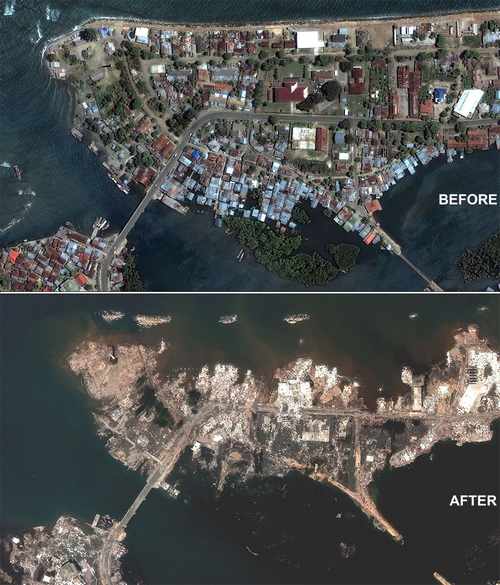
Also, there are other indicators that things are on the move…earthquakes in deep places. Everyone knows about the tsunami that scrubbed clean lots of islands and mainland resorts in the Pacific, but what a lot of people don’t know is that that earthquake was so powerful it actually shifted the axis of the planet…not by a whole lot…but significantly enough that it was noticed.

Which brings me to this point: We live on a dynamic planet.
Living on a dynamic planet means that things are going to change.

Oh yes, they will.
What doesn’t change are peoples attitudes, and for the rejoinder I would like to say that we should take care of our planet regardless of
whether or not our production of greenhouse gases is affecting the temperature of the planet.

One of the more interesting aspects of human influence on the planet can be found in England…eight-to-ten inches below the surface. There, you will find the ash layer…soot really, that is a left over from the birth of the industrial age. Apparently, the ash is from all the coal that was burned to fuel the engines of progress…and even though the descriptions from that time of gray foreboding skies, choking smog, and black lung that affected non-miners the island still has green hills.
And really, that is where I’m coming from.
Life adapts, continues and moves on with us…or…without us.

So what, then, is our motivation for keeping the planet we live on healthy, and nice?
Well, because someone has to be the fucking parent in a world full of shitty diaper wearing children. I wouldn’t let my son run around in shitty diapers, and I suspect none of you would, either

And besides, who wants to lay down in their own garbage?

So, really, the truth of the matter is yes, things are a changing on our planet, and more than likely if we curbed our desire to soil our own beds we probably wouldn’t have so many environmental problems…but there is the issue of the human condition and that, in my opinion, is what the Climatologist were trying to change. Albeit, inelegantly, and deceptively, which in the end did more harm than if they had just been forthright and let he science speak for itself.

In short, yes, there is significant evidence that points to change, and yes, there are a lot of people who have vested interests in advocating for and against doing something.

The real question you have to ask yourself is what are you going to do about it?

Everybody talks about the weather...

bg mentioned the Copenhagen Conference on climate change and the recent fooforaw about the "censoring" of climate change skeptics by the mainstream climatologists.

Now, overall, I am perfectly confident that if human industrial emissions ARE having a significant impact on global climate (and I cannot imagine why they wouldn't - see below) that this conference will continue the great tradition of looking away from a difficult and painful choice until it rips our collective head off and vomits down the neck stump. There never has been a human society that anticipated their own impact on natural systems prior to those systems going to hell. Ask the Sumerians about soil salinization, the Anasazi about irrigated agriculture in a desert, or the Easter Islanders about giant heads. Oh, wait, you can't...But as for the "censoring" the skeptics...my background is in geology, not climatology, but here's my short take:

1. We are in an interglacial, and we know that over the past 1.8 million years the Earth has warmed and cooled considerably from where it is today. From the VOSTOK ice cores in the Antarctic we have O16/O18 ratios that give us a fair idea of global temperatures back into the end of the late Pleistocene. Stratigraphic, palynological and flora/fauna interpretation can give us a good guesstimate of global temps back at least as far as the Proterozoic (4 billion years ago). And we know from that that the Earth has been both much warmer and much colder than it is now.

2. But...the temperature data we have now looks suspicious; it spikes starting in the late 18th Century and that trend seems to be continuing. This trendline is rising at about the same rate as the Paleocene-Eocene Thermal Maximum, which saw 6 degrees of rise in 20,000 years and had a fairly major impact on planetary life.The thing is that we think that the PETM was triggered by one or more natural causes, the most likely thought to be the release of deep-ocean methane deposits or "clathrates". Of the other natural or cosmogenic processes that have affected global temperatures, from cometary impacts to the development of grasses, we have seen none over the past 200 years.

3. We also know that...

4. Industrial gases, including CO2, do have a "greenhouse" effect, and we have poured a tremendous amount of them (relative to the global baseline) into the air since about 1800.

5. So it makes sense, in a purely empirical way, to be highly skeptical of the notion that "humans can't alter the global temperature stasis", which is the primary point of the skeptics. Even if the temp spike and the industrial emissions aren't 1:1, it makes no sense to think that there's no effect at all (which is the main skeptic point).

6. And the real problem is that we know from Venus that there's a tipping point where the greenhouse becomes irreversible. And we don't really know what that tipping point is here on Earth. Runaway greenhouse here is unlikely - we have too much free water - but the point is we don't know. We don't know what is happening, other than the global temperature is rising above the normal trend and we have no smoking gun - no volcanism, no bolides, no clathrates, nothing that we know or think has caused warming in the past - to account for it. We don't know.

7. So since we know so little to me it makes perfect sense to reduce the amount of industrial gas emitted into the atmosphere to the greatest extent possible. And many of the skeptics

- whose evidence consists mostly of nitpicking holes in the theory and some pretty wild assumptions (as in the cartoon above - are paid for by industries that have a short-term stake in preventing this. It's also worth noting, as the Toronto Sun editorial stated:
"A key factor in the controversy is that the data discussed in these e-mails was not suppressed. It was discussed in the IPCC's Fourth Assessment report, which concluded it is more than 90% likely that human emissions of greenhouse gases are responsible for climate change."

This whole business is another attempt to make doing nothing - or making a mistake - seem like doing the right thing. Haven't we been there before?

So my feeling is this: we're not going to reverse the industrial revolution and go back to living in yurts. No one who warns of climate change believes we will. What they are trying to do is talk to a largely uneducated, credulous and greedy public about the notion that we need to put off our pursuit of that Wii and that Hummer H4 to slow down the emissions cycle and reduce the chance that we will end up with a runaway greenhouse.

This is the scientific equivalent of taking your foot off the gas because the terrain ahead suggests there may be a hard left turn in front of you. The skeptics, many of them, are saying "Fuck you, you pussy, floor it!" for no reason other than they have found some irregularities in the climate data, the scientific equivalent of saying that you don't need brakes because the road has always been straight and always will be.

So in a perfect world the climatologists would lay out all the data, point to the trend and then point out the irregularities and discrepancies and admit "We don't know why this is, this seems anomalous, but the overall data seems to suggest this." But the Western publics know only this: anything that curtails their industrial "progress" makes them "poorer" in the short-term.

Therefore if someone can manage to take those irregularities and discrepancies and make them look like a fatal flaw (which is possible with any scientific data you don't really understand how to interpret) they will seize on it as an opportunity to do nothing.

So I don't think that what the climatologists did was smart in the long run; if there IS a serious climate problem, people in general are going to have to become smarter about it in order to solve it.

But in the long run we're all dead and these guys have been fighting the battle against the nay-sayers for thirty years. We all saw how the people who were skeptical about the good sense of invading a fucked-up post-Ottoman Third World dictatorship to let freedom reign were swiftboated and lied about and generally screwed over. They did, too.

So I can fully understand their instinct to shut these guys up before they managed to raise their Pecksniffian bullshit to full Cheney on them.

The editorial in the journal Nature sums the situation up pretty well:
"In the end, what the UEA e-mails really show is that scientists are human beings — and that unrelenting opposition to their work can goad them to the limits of tolerance, and tempt them to act in ways that undermine scientific values. Yet it is precisely in such circumstances that researchers should strive to act and communicate professionally, and make their data and methods available to others, lest they provide their worst critics with ammunition."
But no matter. The entire controversy is a tale told by a lot of idiots, full of sound and fury, signifying nothing. The bottom line is that if this climate problem forces us to make a hard decision today, forces us to put down the TV remote and do something that makes us poorer and smaller in the short run...we'll kick it down the road. We like our problems minor, and our major problems invisible - until the moment they strike us dead. That way it's SO much less stressful.

Just ask anyone in Sumer.

Or on Venus.