Showing posts with label books. Show all posts

Saturday, February 2, 2019

Vestigia militaria

I just finished Andrew Gordon's 1997 The Rules of the Game.

It's a fun read, and does a good job of taking a deep dive into the command culture of the Royal Navy that had such a big effect on the actions of 31 MAY 1916. For what it's worth, Gordon is a "Beatty man" as opposed to Robert Massie, whose Castles of Steel made researching the Scarboro Raid (and the career of HMS Warspite) so entertaining.

Gordon's main point is that the long peace after Waterloo created a culture of rigidity within the RN that was wrapped up in the idea that the fleet actions were supposed to be centrally directed by the admiral in command through strict adherence to maneuvers effected by signals.

That knowing the minutia of the Signal Book became a substitute for understanding what a modern U.S. officer would call the "Commander's Intent". Gordon details actions at Jutland - in particular the Fifth Battle Squadron and its commander, RADM Hugh Evan-Thomas - that demonstrated that this lack of understanding resulted in a lack of initiative, and intelligent actions or reactions to German maneuvers, that cost the RN ships and lives.
I won't go further into Gordon's work except that it's definitely worth a read (as is Massie's, and his earlier volume, Dreadnought, as well).

Here's the utterly different thing, though, that generated this post.

An Army pal of mine recently sent me a link to something about the 3rd U.S. Infantry. Y'know, the guys who do the whole "guarding the Tomb of the Unknown Soldier" and put on the military shows at Arlington and elsewhere? And I'll be the first to admit that as an old NCO and drill sergeant I'm always impressed with the 3USI's showmanship at square-bashing, and how pretty their sliding manual-of-arms looks. It's a sergeant thing, sorry, and there's no real excuse or explanation for it; it's the military version of being a "furry".
But as I was watching the video
(and I have to say that the Army blue overcoat sure is purty. I got in just as the Army 86ed the khaki summer-weight Class A uniform, the last really sharp-looking formal dress we had. After that it was all the hideous AG44/344 polyester abomination and the dreaded "black sack" overcoat that made you look like a Baloney Joe's wino shuffling down to the dumpster for a snack...)
I couldn't help thinking what a beautiful utterly useless military skill all this drill and ceremony is.

Short of falling in and marching from one place to another...what's the point? It's a sort of armed tea ceremony; gorgeous, yes, but completely for show and dressup. For the working day you suck down your tea from a travel mug and move out smartly.

And that's what led me back to Gordon and Jutland.

Because in 1916 the notion of "shiphandling" - whether individual captains and their crew, or flag officers directing squadrons - was literally a matter of life and death. Gordon points out the horrific nightmare of the Fifth Battle Squadron's turn "in succession" under German gunfire that put every ship at exactly the same location as it went through a slow 180-degree roundabout, giving the fire direction officers of the Hochseeflotte the equivalent of a free header.

They knew exactly where to put their projos minutes before the British battleship arrived. It's a tribute to luck and the sturdy construction of the Queen Elizabeth-class that none of the Brits ended up as a crap-ton of their battlecruisers did, as homes for North Sea groundfish and hazards for trawl-nets.

But now?

Aircraft and missiles have made the possibility of a mass fleet daylight gun action utterly impossible.

Individual ship captains and their bridge staff still need to be good at shiphandling. And flag officers still need to know how to arrange and move their squadrons. But that sort of "line-ahead-to-line-abreast" dance? It seems to be as utterly archaic and vestigial a skill as the ability to file from the left or move from column to line does for a modern infantryman.
No higher purpose here, just the rumination that time and tide changes things that we think of as immutable.

Had you told an infantryman of 1850, or a naval officer of 1916, that the skills that were essential to their profession would be as dead as the dodo in a century they'd have thought you were nuts.

But they were, and here we are.

Wednesday, July 23, 2014

Summer Reads


Two of the best that I am reading so far this summer, one just published this year, and one published 63 years ago.   Both have ramifications for the current conflicts in the Ukraine and Iraq.  

The new one was just published in June, Prit Buttar’s 'Collision of Empires: The War on the Eastern Front in 1914'.  Published by Osprey it is the first in a trilogy akin to Atkinson’s three volume opus.

It has very fine reviews at goodreads and more by Amazon customers so I won’t go into any detail here.  The reason I bring it up is because of the account of the campaigns in Galicia and the Carpathian Mountains by Generals Ruzsky  and Brusilov.  It was a war of movement rather than the more familiar trenches familiar to the West.  Part of that area is now the western Ukraine where they have been trying to get out from under the Russian thumb for a century. After WW1 was the Ukrainian-Soviet War of 1919, which the Soviets won.  But the Poles under Marshal Pilsudski occupied parts of the western Ukraine during the confusion.  So many western Ukrainians joined Pilsudski and his Ukrainian ally Simon Petliura in the Polish-Soviet War, where the Poles fought and beat the Red Army in 1921 but could not hold the Ukraine. Just 20 years later some of those western Ukrainians joined with the Nazis in their war against the Soviets.  For example: Stepan Bandera who was born in Austro-Hungarian Galicia in 1909 and as a boy probably witnessed Russian troops invading his homeland.

My only initial disappointment with the book was that the WW1 incursions into Turkey and Persia by Russian and Armenian Armies were not covered.  But probably rightly so as they were in a completely different theater and 480+ pages in one book is enough.  However, there is a chapter that covers the fighting in the Serbian Theater.  One reviewer cried about the maps, but there were more than a dozen good high level ones and I wonder if even the participants at the time had good large scale maps showing the detail of terrain and troop movement.  

I await the author's future volume of the Brusilov Offensive of 1916 where a certain Lance-Sergeant Zhukov made his bones.

Buttar is a medical doctor and does not have a PhD in History.  But his work seems well researched, he speaks and reads German and Russian and has all the research facilities of Osprey behind him.  His daughter is a student at Oxford and he is quoted as saying that he has been dreadfully waiting for one of her Oxford history profs to lambaste his work as amateurish, but it has not happened yet.


The older book, which I am rereading is 'Strange Lands and Friendly People'.  Written by a Supreme Court Justice, mountaineer, conservationist, and favorite whipping boy of Wall Street, Weyerhauser, and the John Birch Society: William O. Douglas. 

Published 60+ years ago it tells of trips by Douglas and his son through Iraq, Iran, Syria and other countries in the Mid East.  The friendly people he writes about are not the Arabs and the Persians, although he does not say anything against them.  He is mainly visiting and writing about the minorities in those countries: Qashquais, Kurds, Lurs, Bakhtiaris, Armenians, Druze, Assyrians, Azeris.  During those travels he and his son backpack and horse-pack throughout the Zagros Mountains along the borders of Iraq/Iran/USSR/Turkey. They visited Bakhtiari and Armenian villages in the valley of Oregon (Boroujen?) in Iran. They also went to Lur villages where he is told the stories of Reza Shah’s 'Butcher of Luristan', Ahmad Amir-Ahmadi and massacres by Reza Shah's Persian Cossack Brigade


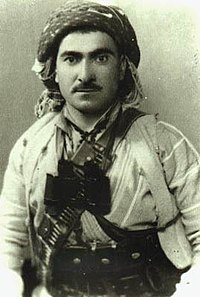
 They visited the former Republic of Mahabad, where by the way Masoud Barzani, current President of the Kurdistan Regional Government was born and where Douglas tells the story of Masoud’s father Mustafa Barzaniand his struggles against both Iraq and Iran.   And they visited Maku in what has been called the Kurdish Bermuda Triangle area bordering the Turkish-Iranian-Soviet border where absentee landlords in Tehran kept the locals starving which incited more Kurdish and Azeri militancy.  And where even in this decade Iran is executing activists for being what they call mohareeb or 'enemies of God'.  

His main purpose in these trips was to see for himself those countries just south of the Soviet Union where the West was propping up dictatorships in order to keep out communism.  His key quote sixty years old but still germane:  "...we must give up the idea that the world can or ought to be standardized to American specifications".

So what is next on the reading list?  


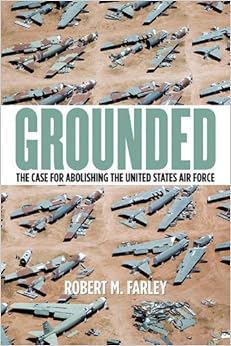
I'm leaning towards Robert Farley's 'Grounded' about doing away with the Air Force and reverting back to pre-1947 with just Army and Naval air arms.  

Not sure I agree with the premise but I want to hear what he has to say.  

Any tips on some good reads of yours that I can start on in August?   I need a few good books to relax with while I enjoy the El Nino weather.

Saturday, January 19, 2013

The Generals (Ricks, 2012)

I just finished Tom Ricks' The Generals, a work I've been meaning to review for some time.

Summary: Ricks conducts an analysis is U.S. Army generalship - specifically the selection, management, and retention of general officers - between WW2 and today and what he believes to have been a clear deterioration of the quality of these commanders and a failure of the U.S. Army's command management process over that time.

Contents: The volume is a fairly clear display of Ricks' strengths and weaknesses, but in my opinions his conclusions are less well-drawn, less useful for the civilian reader, and less practical as a plan for military reform.

For a work of nonfiction The Generals is quite readable; Ricks is a good writer of general military history. It contains some brief but well-drawn portraits and summaries of the careers of the general officers from WW2, Korea, Vietnam, and the "War on Terror" periods, including Marshall, Mark Clark, Patton, and Terry Allen from WW2; O.P Smith, MacArthur, and Ridgeway from Korea; Taylor, Westmoreland, and DePuy from Vietnam; and Powell, Schwartzkopf, Franks, Sanchez, and Petraeus from the past two decades. In each section Ricks uses the officers he profiles to illustrate what he considers the characteristics of flag officer policy in each period and the results in terms of combat effectiveness or the lack of same.

To summarize his overall thesis, he begins by positing that GEN Marshall crafted a system of flag officer selection and employment during the opening years of WW2 that was characterized by idiosyncratic promotion and placement of officers in command slots based on a rather personal assessment of their potential for command.

Of necessity this meant that Marshall and his subordinate theater commanders made some mistakes, and so the other essential component of this system was the early and ruthless relief of officers who were, or appeared to be, not competent at that level of command.

But because of the very nature of the appointments these reliefs were not particularly prejudicial (unless the general officer involved was clearly criminally incompetent or personally troubled) and involved at least one second chance for the officer relieved. Ricks takes the time to point out several men who were relieved, reassigned, and subsequently worked their way back up to command positions.

So by the end of WW2 the "Marshall System" consisted of a linked system of appointment-relief-reassignment conducted as a public process. Relief was - at least according to Ricks - not associated with punishment, not hidden from sight, and not considered a failure of either the individual or the system but rather the understanding that command was a privilege and the critical function of command was the efficient use of (and, where possible, preservation of) U.S. soldier lives.

Ricks then documents the transition from this to what he describes as the current system of U.S. GO management in which reliefs are almost impossible, intimately associated with failure both of the system and the relieved officer, and, consequently, problematic in that incompetent commanders are not quickly removed from the system.

This, in Ricks' view, is directly responsible for problems that the U.S. Army encountered in Korea, Vietnam, Afghanistan, and Iraq.

The work is well constructed, and arguments made with care, and in general I have no problem with Ricks' historical examples. The body of the work makes a good case for Ricks' thesis that the Marshall System has broken down and has been effectively replaced with a dysfunctional GO management process that promotes and places in command officers with severe military and geopolitical flaws.

However, I believe that The Generals also features a number of Ricks' weaknesses on prominent display as well.

He provides absolutely no context for his thesis; no other general officer systems outside the U.S. Army are detailed. He briefly discusses what he considers the differences between the U.S., British, and German armies of WW2 as organizations without any comparison between their differing methods of handling command assignments - which I assume there were. Such a comparison might be very useful.

He is inordinately impressed with the U.S. Army as an organization (which, while an opinion I share as a former GI, is not one that would seem helpful in the author of a work questioning Army policy). His intense focus on the Army, I think, also tends to minimize the role other institutions and branches of the U.S. Government and branches played in the evolution of the role of Army general officers and weakens his analysis.

As just a single example that occurred to me as I was reading his account of the increasing difficulty and complexity of the civil-military relationship during the Fifties (which he lays primarily at the feet of the "atomic military" and the problems the Army had with its role in the early nuclear age); he never once brings up the creation of the National Security Advisor position that effectively superseded the role GEN Marshall had played in WW2.

Certainly the interposition of a civilian appointee tasked with determining the scope, and even the details, or "national security" must have had some impact on the role of the Joint Chiefs, of the Army chief, and the commanders of Army theater-level organizations. But what that impact was, or whether there was any at all? Ricks has nothing to say on the subject.

Ricks doesn't deeply examine the role of military professionals in the pre-war debates leading to the the run-up to the post-WW2 interventions. He mentions, for example, that there might have been (and are) some teensy weensie problems with getting the citizens of a democratic republic to enthusiastically support a series of complex cabinet wars with difficult-to-articulate (at least if the speakers were being honest) objectives without discussing the effect this might have on the role, or ability, of general officers to influence the approach to or conduct of such wars.

Conclusions: Rick's draws the following conclusions:

1. That the current general officer corps of the U.S. Army has been crafted to be technically and tactically competent but is hopeless at anything more complex, being both too intimately entwined with civilian politics while at the same time poorly trained and educated about strategic and geopolitical issues and the current methods of training, promoting, and retaining generals should be changed.

2. That the civil-military relationship is deeply flawed, with both too much and too little interplay between the elected officials and the generals, and that a change in general officer management will improve this.

3. That the U.S. Army is, as a result, a superb instrument at the tactical-to-operational levels but deeply flawed for anything above that; i.e. that the U.S. Army can win battles but not wars, and that a change in GO management will improve this as well.

Recommendations: So far, so unexceptional. His final chapter containing the recommandations, however, sort of throws up its hands at ways to address this.

First, he recommends a return to the Marshall-style early relief-but-without-prejudice system. He then admits that in the small, insular world of the post-draft U.S. Army that this might not be possible, although he posits some potential moves to make this happen. My assessment would be even less optimistic. Ricks doesn't provide anything remotely like a way to develop a constituency inside or outside the Army that would drive this process. Marshall's revolution occurred at a unique moment in U.S. Army history. A revolution of similar magnitude - and that is what this would be - would need a similar setting.

Some of his other, relatively innocuous suggestions include personnel management changes such as the "360 review" concept (including juniors' as well as seniors' assessments in an officer evaluation report), extending the retirement age for senior officers (which is interesting, given Ricks' extensive documentation of Marshall's removal of an entire generation of senior officers in 1941 and '42 for being too elderly to command in the rapid pace of mechanized war), and revising officer education to produce general officers with the skills to think and plan strategically and improvise tactically in unexpected geopolitical situations. All worthy discussion-starting points in my opinion.

I consider that perhaps his least practical recommendation is his suggestion that unit rotations be halted or severely limited in counterinsurgency situations.

Given that this implies that U.S. soldiers would likely be locked into fighting against foreign rebellions for years the notion is beyond impossible both militarily (the probability of running out of troops is not inconceivable) and politically.

More troubling to me is Ricks practice throughout the work of avoiding questioning the usefulness of, or the role of the general officers in pointing out the likelihood of problems to, Great Power intervention in Third World rebellion suppression, more of which below.

Assessment: As a historical review and a potential discussion-starter I can cautiously recommend The Generals. It is eminently readable, and Ricks' work is not without value on the history of the U.S. Army's general officer policies and procedures.

As an actual prescription for constructive change in the U.S. Army, however, I consider this work severely limited.

First, it accepts without demur the formulation that an "increasingly chaotic" uni- or multi-polar world implies the need for U.S. military adventures in foreign domestic insurrections, rebellions, and disturbances.

Second, it implies that "better generals" can improve the likelihood that U.S. forces can successfully intervene in such conflicts. For example, although in his section on the Vietnam War Ricks mentions that the post-Tet success in counterinsurgency came largely as the result of the combination of the decimation of the COSVN guerrillas and the improvement of the ARVN - instead of any particular change in U.S. officer competence, and his section on Iraq specifies the employment of bribery of the Sunni muj and the success of Shia ethnic cleansing as the reason that the U.S. occupation "succeeded", he still considers these to have been be amenable to "better" U.S. generalship, a conclusion that I consider tenuous at best and unsupported at worst.

His formulation also elides the problem of the larger, mainly civilian/political formulations of "more rubble/less trouble" and "Muslims = terrorists" that seems to drive these open-ended interventions. Ricks seems as bound as his troubled generals to the tactical aspects of geopolitics, unwilling to accept that many foreign troubles contain too many unknown - and unknowable - strategic aspects for even the most widely read and deep-thinking general officer will be unable to predict.

Who, for example, would have been able to foresee that providing Western military aid to rebels against the Algerian, Tunisian, and Libyan dictatorships would have helped foment a rebellion in Mali that Western military assets are presently fighting? And would a U.S. general- even a well-informed strategic thinker - genuinely be willing to suggest that since the West has a great deal to actually create the conditions for this revolt that that the best response might be to wait and watch, doing as little as possible beyond providing whatever the local proxies might need to limit the success of most anti-Western of the rebels?

So while Ricks' The Generals suggests a link between in improvement in U.S. general officer policies and improved success in the "little wars" the U.S. has been fighting since the early Nineties, my thought would be - I wonder...if such improvement, had it been in place before Vietnam, before Iraq, today...have resulted in fewer such wars, instead?

The Generals: American Military Command from World War II to Today, by Thomas Ricks (Penguin Books, 2012) ISBN-10: 1594204047 20.22 HC at Amazon.com

Saturday, October 15, 2011

MilPub Book Club: Q4 2011 Selection" "The Accidental Guerrilla" (Kilcullen)

So.

We talked a little earlier about discussing some written work of geopolical or military import. Jim at "Ranger Against War" has volunteered to be our Master of Ceremonies for the first outing and has selected the David Kilcullen work "The Accidental Guerilla".Fareed Zakaria, who for all his wide-ranging geopolitical views seems to know about guerrilla war what a cow knows about the Council of Trent, says of this work: "This book should be required reading for every American soldier, as well as anyone involved in the war on terror. Kilcullen's central concept of the 'accidental guerrilla' is brilliant and the policy prescriptions that flow from it important. And that's not all; the book has many more insights drawn from various battlefields." But nevermind.

Kilcullen was a fairly critical player in the Bush Administration formulation of our current "strategy" - if that is the correct term for the congeries of tactics and politics that the United States is employing in central and southwest Asia - and has had the ear of the "COIN" faction at the Pentagon for some time. Regardless of one's views on his ideas it is difficult to deny that they have been influential.So here's the plan. If you want to participate hit your library, or your Kindle, or bookstore, or whatever (I have a copy reserved at Portland Public Library already) and start reading.

In mid-November jim will post his thoughts here and open the dance.

Sound good?

Sunday, September 4, 2011

Gift Box; Books, Fruits, and Nuts...

DragonCon ??? A sci-fi fanatic acquaintance stumbled across this and emailed the link. This parade was held in Atlanta? I wonder what they do in the convention hall – fire-breathing workshops? - lady troll mudwrestling? And what is served in their foodcourts? I hereby declare that the Left Coast is no longer the land of fruits and nuts, that distinction is now bestowed on Georgia. I use to think that the Civil War re-enactors were a little ‘dinky dau’. Maybe they are the same people expanding their horizons. http://www.youtube.com/watch?v=kgp2PQAV3pg

Fall Reading List – One new book on order titled: ‘How the Helicopter Changed Modern Warfare’ by Walter Boyne. It has some good reviews. This I understand is a history of the development of military rotary wing aviation and of the evolution of their use and tactics and not a technical discussion on aerodynamics. Coming in the mail soon I hope. I am not an aviator myself but have had a love and hate relationship with helos since I took my first ride 50 years ago over the pine savannahs and sawgrass swamps of Camp Lejeune in the passenger seat of an HOK-1 (later renamed OH-43), the one with the side-by-side intermeshed twin rotors. I would hope it covers Brute Krulak pushing the vertical envelopment concept in the 1940s when everyone else considered helos as only good for observation and search-and-rescue. The author Boyne is one of the founders of ‘Air and Space’ magazine and a pre-eminent aviation historian so I am expecting a good read. This should be on your list Al, but then you probably already have a copy. http://pacificamilitary.com/wordpress/?p=34

Plus some used books I picked up from the annual book sale at our local library listed below:

I already started on Asprey’s bio of ‘Frederick the Great’, but am only through the first chapter about his youth. What a strange relationship with his father. I thought the English royals had toxic family relationships but they were nothing compared to this household.

Also a bio of Cervantes the author of Don Quixote – how could a jarhead like me resist the life story of a Spanish Naval Infantryman who was reportedly at the Battle of Lepanto.

A bio of Graham Greene the novelist, occasional spy, friend of Kim Philby and Charlie Chaplin, and critic of American imperialism.

The memoirs of Vincent Sheean, foreign correspondent who interviewed Abd el Krim in the Rif War of 1920s Morrocco, Sun Yat Sen and Borodin in China, and who covered the Spanish Civil War, Italian invasion of Ethiopia, and the occupation of Sudetenland.

Barbara Tuchman’s ‘The March of Folly’ – I think she needs to update with a new chapter on Junior Bush.

And I have to confess some spy thrillers, I cannot stay away from LeCarre and Alan Furst, plus a few of Stuart Kaminsky’s Moscow detective mysteries. I am addicted, I use them as in-betweens of more serious reads.

Monday, December 13, 2010

The Other Side of the Hill

One thing I think affects us here in the U.S. - and has the effect of violently skewing our perspective on the wars we have been fighting since the end of WW2 - is the degree to which our government, and to an extent, our military and diplomatic arms, have figured out how to control and when in their interests spin the accounts we read of those wars.

Nir Rosen has just released a book about his view of the war in Iraq. One of the few non-embedded journos in the U.S.-occupied Middle East, Rosen has connections inside the Arab/Muslim world that we seldom hear from our news media. Obviously he has his biases, just as Tom Engelhardt, Tom Ricks and Michael Yon have theirs, but his biases are a bit useful in coming from what the British used to call "the other side of the hill".

I don't think that anyone reading here will be shocked that Rosen's account suggests that the U.S., while effective in subduing the Sunni muj (who in many cases were coopted not as much by the fear of American power as the fear of the Shia ratissage that would follow the departure of American power...) and the Sadrist Shia nationalists, seem to have neither a plan for nor a clue as to what will emerge from the wreckage. But there's knowing something and really knowing it, and I highly recommend Rosen's work (I've already gotten through the first chapter) as a window into the really terrifying complexity of the reality we have had such a large hand in creating.

Worth getting on your Christmas list..!