Showing posts with label air war. Show all posts

Friday, December 10, 2021

End of an Era

Some eighty years ago the Battleship Era ended in a flurry of bombs and torpedoes that sank the two capital ships of the Royal Navy's Force Z.

Yes, aircraft had been involved in sinking the most capital of capital ships prior to December 10, 1941. But the circumstances allowed battleship fans to temporize. 

An aerial torpedo ensured the doom of Bismarck, but the actual sinking occurred during a surface gun action. Battleships were sunk by aircraft at Taranto and Pearl Harbor, but those were surprise attacks on unsuspecting moored warships.

There was no gray area on December 10. Aircraft found and sank two of the Royal Navy's heavy units, one, Prince of Wales, one of the newest and most powerful British battleships extant.

The "moral" I've always been told that this story taught was that in the 90 minutes it took the air attack to sink both Prince of Wales and Repulse the battleship era ended and any naval organization that pursued heavy gunpower rather than carrier airpower was foolishly incompetent. 

What's kind of intriguing about one "counterfactual" is that Force Z had come within five miles of an IJN task force consisting of "six cruisers" - I've been unable to discover which six these were, but at least one was Chōkai (鳥海), a Takao-class heavy cruiser.

Neither task force was using radar effectively. The Japanese because IJN radar technology was crippled throughout the Second World War, the British because Prince of Wales' radar had gone down earlier in the mission, supposedly through overheating in the tropical heat and humidity.

(Worth noting that in this the PoW lived up to her reputation as a "hard-luck ship"...)

Let's assume that at least three or four of the other "six cruisers" out that night were also heavies. The Japanese heavy cruisers were beasts, especially heavily armed with the big 24-inch torpedoes, and the IJN trained extensively in night gun and torpedo action as the encounters off Guadalcanal the following year proved.

 
Let's suppose that the two task forces had, instead, bumped into each other in the night.

The British weight of metal would probably have torn the Japanese cruisers apart, but the IJN night fighting and torpedo tactics might well have either sunk or badly damaged the British capital ships to the point where their sinking by aircraft the following morning could be written off the same way that the battleship aficionados wrote off Bismarck, Taranto, and Pearl Harbor.

The "end of the battleship era" might now be attributed to the naval and naval air actions off the Philippines in 1944.

No real point here other than to consider how things we take for received wisdom often turn on small, nearly insignificant events, like the failure of the British radar the night of December 9/10.

Thoughts?

Friday, August 12, 2016

More rubble = more trouble

Interesting study (Dell and Querubin, 2016) released this summer on some effects of "kinetic warfare" (i.e. bombing, shelling, and strafing) in the RVN in 1969.
The study's conclusion should surprise none of us who have watched the "more rubble, less trouble" approach to the Middle Eastern problems over the last two decades or more:
"While U.S.intervention aimed to build a strong state that would provide a bulwark against communism after U.S. withdrawal, bombing instead weakened local government and non-communist civic society. Moving from no to sample mean bombing reduced the probability that the village committee positions were filled by 21 percentage points and reduced the probability that the local government collected taxes by 25 percentage points. The village committee was responsible for providing public goods. Bombing also decreased access to primary school by 16 percentage points and reduced participation in civic organizations by 13 percentage points."
In other words; bombing the living shit out of people pisses them off and makes them LESS likely to go along with whatever cunning plans you have for winning their hearts and minds, or grabbing their balls, for that matter.

How well this study conflates with the current enthusiasm for various Western polities' for bombing the shit out of the Middle East is difficult to assess. But it certainly does seem to suggest that John Paul Vann may or may not have been right about the best weapon for suppressing rebellions but he seems to have been absolutely correct about the WORST.

Tuesday, May 3, 2016

Collateral Damage

Back in October our barkeep P.F. Khans asked: "...Who is Responsible for the Hospital Bombing?" about the then-current speculation over the U.S. armed forces actions during a bombardment of a Doctors Without Borders (Medicins san Frontiers, or MSF) hospital in Kunduz, Afghanistan.


One of the persistent questions was how could the U.S. and U.S.-advised Afghan forces have targeted what was a very distinctive hospital compound, one that should have been recognizable even from the air as a no-fire zone.

The U.S. higher responsible for the area of operations, Central Command (CENTCOM) released its report in April, and it contains some information on how this could have happened. From the blog Lawfare:
"Two mishaps that were clearly not criminal in nature occurred early on in the night mission, and those mistakes paved the way for the tragedy to follow in Kunduz. First, the attacking aircraft—an AC-130U with extensive firepower on board—took off early because of a report of U.S. troops being attacked. Due to the haste of the aircraft’s departure, there was no time to upload the “No-Strike List” (NSL) to the aircraft’s computers.
This question came up repeatedly in the original discussion. In his post, PF said:
"There's a Fire Direction Chief (sorry FDChief) that's got an AFATDS computer which should have had all hospitals/other sensitive areas restricted, so that you are warned if you are shooting there. Someone has to manually enter that data, was that data input into the system? Was the hospital in this AFATDS computer?

I don't see a reason that it wouldn't/shouldn't have been. I get that an AC-130 gunship may have to cover a lot of territory, but it's the 14th year of the war. Someone has managed this data. Someone spent a boring deployment porting this data to all the systems. This should have been done by now, that hospital didn't spring up when the Taliban attacked.

So if that wasn't there, the FDC is in trouble.
If it was there and the FDC overruled it without higher approval, the FDC is in trouble."
In the comments section I noted that the USAF didn't use the U.S. Army FA fire direction system, but that while
"...(a)ir fires are neither controlled nor coordinated thru the FA direct support elements. That includes the firing battery and battalion FDCs as well as both the FO elements attached to the maneuver platoons and the FSEs at the maneuver company and battalion HQs. The FSEs may liase w USAF control teams to clear potential CAS target areas of friendly forces but have no role in CAS missions beyond that. So the responsibility for CAS mission direction would be on the USAF FACP (forward air control party - at least that was the term when I was still in ten years ago...). The FAC should have, as has been noted above, been advised of NFAs ("no fire areas") as well as RFZs ("restricted fire zones") established by the maneuver commander."
Well, it turns out that the control party - which consisted of U.S. Army Special Forces troops - had more problems than just missing overlays. The Lawfare article goes on to report:
"Second, well before the attack on the MSF facility began, the U.S. aircraft’s satellite radio—its data link—failed. While the aircraft still had radio contact with ground forces, it could not send or receive emails or upload data, such as the NSL. Special Operations forces on the ground wanted to target a prison overrun by the Taliban, formerly run by the Afghan government’s National Directorate of Security (NDS). However, because of the lack of a data upload capacity and imprecise descriptions at both ends of communications, the aircraft crew mistook the MSF facility for the former NDS prison."
To make matters worse, the commander of the maneuver forces was working with a combat controller - or, more specifically, a "joint terminal attack controller" or JTAC (since a combat controller is a USAF-specific occupational specialty and the JTAC may be from any service branch...). The report says that the aggressive maneuver commander and the cherry JTAC turned out to be a combination lethal for the patients and staff of the MSF hospital:
"...ground forces informed the crew that the intended target had an “arch-shaped gate.” While this description matched many buildings in the area, the crew took it as a match for the MSF facility. The ground force commander (GFC) did not seek clarification, and had no independent visual ability to confirm the crew’s judgment. In other words, the GFC and the aircraft crew were actually labeling entirely different structures as being one and the same. (T)he (air)crew repeatedly asked the GFC to confirm that the intended target was a “large t-shape building.” The GFC (or his inexperienced subordinate, the...JTAC...confirmed this description, which matched many buildings in the vicinity. Unfortunately, the crew and the GFC were still unknowingly talking about two different buildings: the crew “had eyes” on the MSF facility, which was marked with MSF emblems but not the more familiar red cross or red crescent symbols used globally to label medical sites, while the GFC believed that the crew was describing the intended target: the NDS prison held by the Taliban. The JTAC did not help matters with instructions such as “soften the target,” which did not correspond to the situation the crew was viewing in real time."
And the maneuver commander seems to have been a real wild man:
"This communications failure was compounded by the inappropriately aggressive posture of the GFC, whom the military report described as having “willfully violated” the ROE. The US ROE restricted the use of air power, except in response to a hostile act by the Taliban directed at U.S. forces. However, the GFC ordered the attack on the MSF facility although the GFC “could not have reasonably believed” that the attack was justified by an ongoing hostile act. While the GFC asserted to military investigators that he saw what he believed to be an attack on a friendly military convoy, the Centcom report viewed that assertion as inconsistent with other sources, including aircraft video, radio transcripts, and tracking data. Moreover, the military’s report indicated that the GFC, because of distance from the convoy, could not have had the line of sight that he claimed. In sum, even an attack on the “right” target—the NDS facility—would not have been a response to hostile fires, as the ROE required. Because of the GFC’s aggressive posture and the mutual misidentification of the MSF facility as the “right” NDS target, the attack commenced."
Once the bombardment started the commo problems interfered again;
"Shortly after the attack started, MSF representatives contacted U.S. commands, imploring them to stop the fires. However, the communications failure and the ground-air misunderstandings severely impeded a timely U.S. response. About 12 minutes into the attack, personnel at the U.S. Special Operations Task Force inquired about the coordinates of the target being engaged. Two minutes later, U.S. personnel contacted the crew and sought to confirm that the attack had not harmed the MSF facility. The crew stated that the MSF facility hadn’t been touched, reporting that the only structures affected were the “T-shaped building” or adjacent structures, which the GFC had earlier mistakenly identified as the NDS prison, although in reality the crew was still describing the MSF hospital. It took several more minutes to ascertain that the building being attacked was in fact the MSF facility. Once that awful realization took hold, the attack ceased."

The military’s report details the errors that dogged each step in this appalling episode. Not unlike the critical moments of Ian McEwan’s novel Atonement, missteps and misunderstandings at several junctures paved the way for an unspeakable tragedy.
In other words; war.

The usual suspects are saying the usual things. "Conservatives" are draping themselves in yellow ribbons, "liberals" in loathing of the licentious soldiery and distrust of the "official story". Regardless of opinion, the business is done, now, except for in the grave, or the twisted bodies of the injured, or the anger of the survivors and families.

My original point in the comments stands; that regardless of whether this was a deliberate attack or a mistake, the failure of the U.S. command authority in Afghanistan to quickly and publicly discipline the individuals involved sent a clear message that Afghan lives didn't matter, not as much as American servicepeople's lives, or even of their careers.

When suppressing rebellions there is a tried and true method. Unfortunately, it is also unspeakably savage, the Roman Way - make a silence and call it peace.

The West wants and hopes that hearts and minds can be won, that the "Afridis where they run" can be wooed rather than butchered, that there is a kinder, gentler way to suppress revolts. Unfortunately, to do that the suppressor's troops have to be held to a standard that admits no such lethal errors as these, and that every drop of blood spilled with the sword is payed for with a drop of blood drawn by the lash.

We choose not to lash ourselves, and therefore should not be surprised that our means and methods are not embraced by those we slash.

Thursday, September 11, 2014

Eradicate the brutes?

So apparently the armed might of the United States (sort of...well, the armed aerial might, anyway) is to be deployed to "eradicate the cancer" of the Islamic State. But that's okay because we're not going to send in the 1st Infantry Division and the Iraqi "government" is now a sweaty love-heap of nonsectarianism and the Saudis really, really promise not to send money to the Islamic theocrats in Fallujah and...well, because we're Good and they're Evil and Good always wins in the movies. And who doesn't love a good movie, right?

Well, okay then!

I know I was advocating using the USAF to act as the Iranian-Iraqi airforce a couple of months ago. I still think that the offer of CAS might have opened up a way for my country to slowly regain some sort of diplomatic re-entry into a region where it has done everything possible to help create geopolitical conditions as fucked up as a football bat but was largely convinced by my commentors here that it was a bad idea then and I don't see anything to suggest that this is any better an idea now that it's being proposed as some sort of regional U.S. aerial fun-fair.

The rabid Sunni theocrats and 8th Century wannabes that run the so-called "Islamic State" are some real sonsofbitches alright and like all theocrats of every variety the notion of their controlling anything more than the local soup kitchen gives me the giggy. But - and, admittedly, he writes purely for the comic effect - Gary Brecher has a damn good point:
"What the jihadis have accomplished is grim enough, but their showoff videos of beheadings and mass executions are minor surges in what is, like it or not, a rational process: The partition of Iraq into three, rather than the previous two, ethnic/sectarian enclaves. Before I.S.I.S made its big move, Iraq was an unstable, immiscible column divided into Kurdistan and “everything else,” with “everything else” ruled by a weak Shia army.

Now the natural three-term partition is in place again, with the Sunni of the center, Saddam’s tribe, back to doing what they do best. I don’t mean to minimize the brutality of the operation, but this is a fairly bloody part of the world, and we contributed rather significantly to that blood-mush ourselves."
Um. Oh, yeah, that. Oops.

I have never had much of an opinion of people in general. The Public IS an ass, by and large. But this is more than usually asinine. Something like 61% of the U.S. public thinks that more rubble = less trouble in the Sunni portions of Iraq and Syria. And that's because...John McCain says so?

What the fuck, people?

The bottom line is that in the zero-sum game of Middle Eastern politics it was always going to be difficult to resolve the issues inherent in the multi-sectarian post-Ottoman, post-colonial "states" like Iraq and Syria. There was the "old" way to play it - where the ruling faction (Tikritis in pre-2003 Iraq, Iranian-Shia clients in post-2008 Iraq, Alawite Shiites in pre-rebellion Syria) butchered the non-ruling factions if they ever got uppity. But we largely helped break that mold when we rampaged into the region killing people, breaking shit, proving that the old post-colonial secular governments were useless other than for being corrupt and weak, knocking groups around and throwing arms and anger all over the place. After that, and given that we ensured that the Sunnis in Iraq were dealt a bloody losing hand, it was nearly inevitable that if they didn't just roll over and die that they would choose to fight. And the more bloody and worse losing hand they were dealt ensured that the fighters they'd throw out would be the most ruthless they could find. The "Free Syrian Army" isn't a loser because they can't fight; they can't fight because they're the losers, the "moderates", who still see options other than red-handed war. The IS guys aren't that stupid. They know that the best in life is to crush your enemies, to see them driven before you and to hear the lamentations of their women.

And we think a couple of GBU-28's is gonna change that?

The Sunni in the region are going to be horribly, bloodily crushed. Or they will find leaders and fight and will, eventually, establish some sort of polity that will probably be led by someone and look like something the U.S. isn't going to "like". If the U.S. is going to get involved in this hot mess - which I'm not sure we need - we need to start from there. Anything else, any other "policy" is based on complete foolishness, as is this. IF we're going to spend blood and treasure, we should at least understand what we're spending it on and what it might buy. This nonsense tells me we haven't the slightest fucking clue other than to play some idiot game for the morons in the U.S. public and the courtier press.

Honestly, people. Can't anybody here play this goddamn game?

Saturday, October 5, 2013

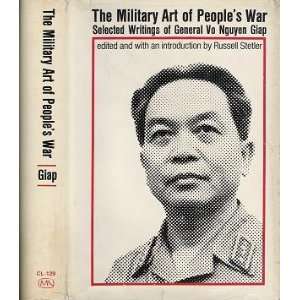
Võ Nguyên Giáp RIP . . .

. . . or rot in hell depending on your point of view.  Dead at 102.  Outlived his counterpart Robert McNamara.  Outlived his fall guys, Generals Navarre and Westmoreland.   But then Giap had two things going for him that Navarre and Westy did not: 1] it was his backyard whereas his enemies were over 10,000 miles from home, and 2] he had a sanctuary, his enemies did not.  He also outlived two other of his victims.  He was still Defense Minister when Vietnam beat Pol Pot's Khmer Rouge and General Xu Shiyou's PLA.  Too bad for his country that he was too old and retired from military affairs in 1988 when China occupied Vietnam's Johnson Reef and killed 64 Vietnamese soldiers.


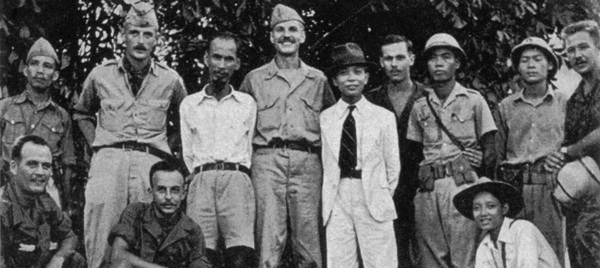
 He was self-taught in matters soldierly.  He did not turn to a military life until his thirties.  He went to High shool in Hue, college in Hanoi, and did further study in Paris and China.  Started his adulthood as a teacher and a journalist unlike Navarre who graduated from Saint Cyr, and unlike Westmoreland who was an honor graduate of West Point.  But even as a younger man he read extensively of Napoleon (especially of his mountain campaigns), Sun Tzu, the American Revolutionary War, and then later he read Mao.  And what Wikipedia and Vietnamese sources will never divulge, he also had some military training from an American OSS team.  Giap is the short dapper one in the white suit and my father's dark fedora hat two down on the right from a young Ho Chi Minh in shorts.  The American soldier between them is US Army Major Allison Thomas head of the OSS training team.


General Hal Moore, who co-wrote "We Were Soldiers Once . . . and Young" about the battle of Ia Drang, said that Giap was " ... one of the greatest military commanders of the 20th century".  Westmoreland called Giap a butcher in a 1998 interview in George magazine: "Of course, he was a formidable adversary . . . but he persisted in waging a big-unit war with terrible losses to his own men. By his own admission, by early 1969, I think, he had lost, what, a half million soldiers? He reported this. Now such a disregard for human life may make a formidable adversary, but it does not make a military genius."  Both Moore and Westy may both have been right, sour grapes or not.

Giap's birthplace, Quang Binh, is the province just north of the DMZ which took the brunt of America's air war against the north: thousands of tons of bombs more than any other province in the north.  LBJ had no restricted targets in the North Vietnamese panhandle where Quang Binh was located.  Not just B-52 arclights, and Navy and Air Force Alpha strikes, but it was also a dumping ground for any returning American aircraft that could not get to their primary target for weather or any other reason.  The photo below shows Giap congratulating workers of the transport boat team on Gianh River just a few mile north of the DMZ in 1968.  I first thought it was staged, but now I think not.  He is one of their native sons, not some Hanoi bigwig.  He is talking to them in their own drawling central Vietnamese dialect, which is as different from the harsh pronunciations of the north and the tonal patois of Saigon as is the speech of an Iowan farmer from Brooklynese or Dallas twang.  They are liking him for being just a country cousin like they are and a local boy made good.


 There is an interesting story that the spot he was born in was under the shadow of a jackfruit tree.  Or interesting to this vet anyway.  The jackfruit (mít in Vietnamese), although a sweet delicacy, has some martial arts overtones in central Vietnam.  They have a thick pale green rind with thousands of sharp hexagonal spines.  There is an old ballad from that part of the country about a blind hero using jackfruit rinds as some type of brass knuckled fist coverings during a Vietnamese boxing match.  So I suspect that story may be apocryphal, sort of like Washington's cherry tree.   Anyway if there is a good Viet restaurant in your neighborhood try the jackfruit salad or mo' better try the dessert of sweet ripe jackfruit in coconut milk if they have it.  You won't regret it!